
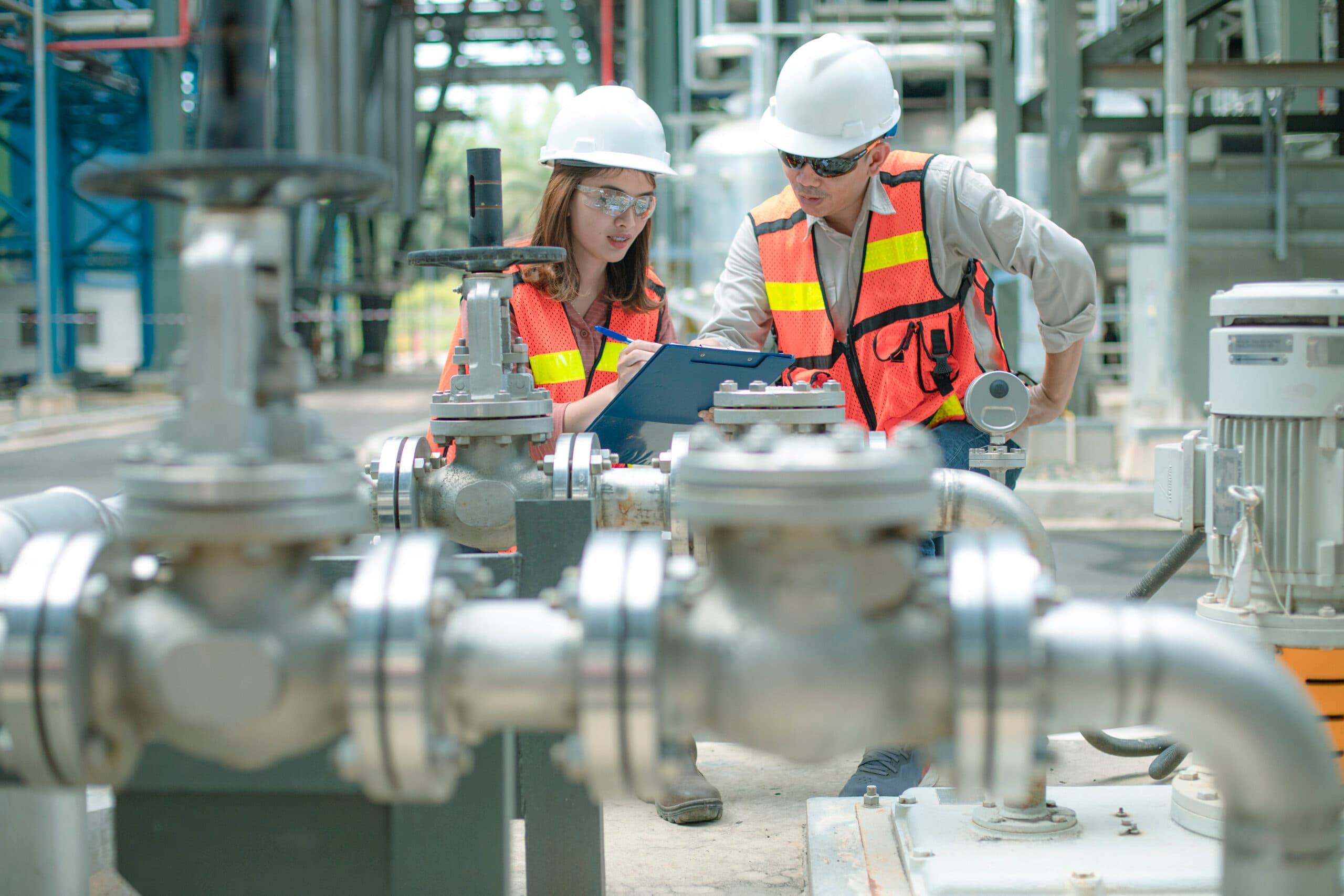
A stick-built pyrolysis plant takes two to three years to go from a signed contract to a running reactor. Our containerized systems ship in a fraction of that time, and the reactor arrives already commissioned. That single difference — where the plant gets built — changes the economics of almost every project we touch.
We build our fast pyrolysis systems inside 40-foot shipping container modules, assembled and tested in a factory before they ever reach a customer's site. It's not a gimmick or a marketing angle. After years of designing, operating, and selling these systems, we're convinced modular is the right way to deploy pyrolysis for the 5–75 TPD range where most real projects live. Here's the reasoning.
The Problem With Building on Site
A conventional pyrolysis facility is a construction project first and a chemical process second. You're pouring foundations, running structural steel, coordinating a dozen trades, and doing precision welding and instrumentation work in a field — often in a rural location where skilled fabrication labor is scarce and the weather doesn't cooperate. Every one of those steps is a place where the schedule slips and the budget grows.
The bubbling fluidized bed reactor at the heart of our process runs at 450–550°C with a reaction time under two seconds. Getting reliable bio-oil, biochar, and syngas yields out of that depends on tight control over heat transfer, vapor residence time, and particle handling. Those are exactly the tolerances that are hard to hold when the reactor is being welded together outdoors by a crew that has never built one before. Field quality is inconsistent by nature, and pyrolysis punishes inconsistency.
What a Factory Floor Actually Buys You
When we build a system in our shop, the same team assembles module after module in a controlled environment. Fixtures are reused. Welds are inspected the same way every time. The reactor, the feed system, the char collection, the condensation train, and the controls are integrated and functionally tested before the module is loaded onto a truck. By the time it ships, we already know it runs.
That repeatability is worth more than it sounds. It means the fifth system we build is measurably better than the first, because the lessons carry forward into a fixed production process instead of evaporating at the end of a one-off construction job. It means when a customer calls with an issue, we're troubleshooting a configuration we know intimately, not a bespoke plant someone assembled to their own interpretation of a drawing set. And it means our lead times are getting shorter as our fabrication process matures, not longer.
The 40-foot container form factor is deliberate. It's the most standardized shipping unit on earth. It moves on any truck, rail line, or ship without special permitting for width or height in most jurisdictions. It arrives, gets set on a prepared pad, and connects to utilities and feedstock handling. Site work drops from “build a plant” to “prepare a foundation and make connections.”
Modularity Is How You Scale Without Betting the Company
Here's the part that matters most for anyone weighing a project. A modular design lets you scale in increments instead of one terrifying leap. Our path runs from a 6 TPD demonstration unit — we have one under construction in Salisbury, Maryland right now — up to a 75 TPD commercial reactor, and then to 300 TPD by running four 75 TPD lines in parallel.
You don't have to commit to 300 TPD on day one. You prove the economics with feedstock you actually have, at a scale you can actually finance, and then you add modules as your feedstock supply and offtake agreements firm up. If demand grows faster than expected, you add a line. If your feedstock supply is seasonal or lumpy, you can idle a module without stranding the capital in an oversized single reactor that has to run flat-out to pay for itself. Try doing that with a monolithic plant built for one throughput number.
This is also why the parallel-line approach beats simply building one enormous reactor. Four 75 TPD lines give you redundancy — maintenance on one line doesn't take the whole facility offline — and they let you match capacity to feedstock in steps that a lender can underwrite.
Where Modular Isn't the Answer
I'd be misleading you if I claimed containerized systems win every time. There's a real ceiling. Somewhere above a few hundred TPD at a single site, the economics start to favor purpose-built, stick-constructed plants with larger single reactors and integrated infrastructure. If you have one massive, consolidated feedstock source — a large sawmill complex, say — and the capital and time to build for it, a custom facility can beat a stack of modules on cost per ton.
There's also a footprint consideration. Parallel modules take more total real estate than a single equivalent reactor, and each connection point is another interface to maintain. For most of the projects we see — distributed feedstock, staged financing, operators who want to be running this year rather than in 2028 — those tradeoffs are easy to accept. But they are real, and we say so on every project call.
How This Shapes the Way We Work With Customers
Because the systems are modular, our commercial models can be too. Some customers buy the equipment outright and run it themselves — that's our OEM equipment line. Others want us to design, build, and operate the plant for them, or to build and train their team before handing it over. Those options live under build and operate a plant, and the modular architecture is what makes the build-train-transfer model practical: we can bring a module online, run it with your people alongside ours, and transfer operations once the process is stable.
If you want the technical detail on the reactor itself, the temperatures, residence times, and yield ranges are laid out on our fast pyrolysis specifications page, and the broader system design sits under modular systems and our technology. The output is the same regardless of configuration: bio-oil at 40–70% yield, biocharat 15–40%, and syngas that we recycle to heat the reactor, which is what makes the process thermally self-sufficient once it's running.
The reason we keep coming back to modular is simple. Most of the people who call us don't have three years and a general contractor. They have a waste stream, a rough sense of the market, and a need to see the process work before they scale it. Building in containers is how we get them from a conversation to a running reactor without asking them to bet everything on a single pour of concrete.