
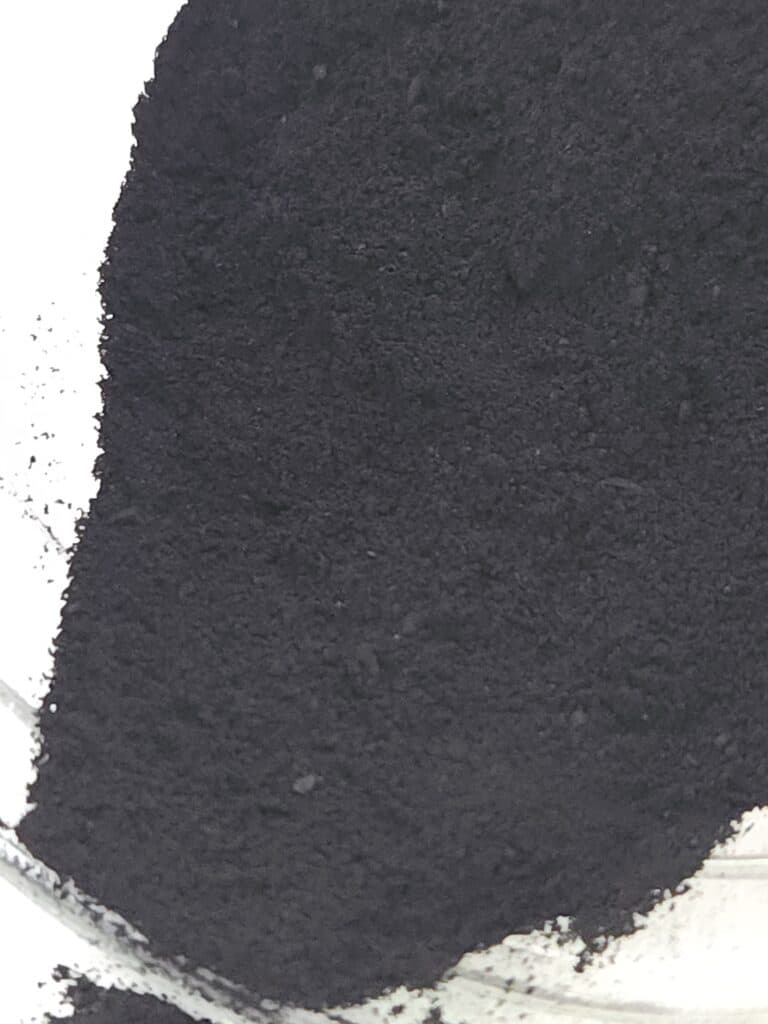
Stormwater engineers have been calling us more in the past two years than in the previous five combined. The question is almost always the same: “Can your biochar meet spec for a stormwater filter installation?” The answer is yes — but the conversation that follows is usually more nuanced than they expect.
Biochar is proving itself as a stormwater filter medium in projects across the country, from parking lot bioretention cells to highway median filters. But getting it right requires understanding what makes biochar work in this application, which pollutants it handles best, and how to spec it properly. We've shipped biochar into enough of these projects to have opinions on all of the above.
The Problem Biochar Is Solving
Rain hits a parking lot and picks up copper from brake dust, zinc from tire wear, phosphorus from landscaping fertilizer, and petroleum from every car that's ever dripped a little oil. That runoff goes into a storm drain and, in most municipalities, straight into a creek or river. No treatment.
This isn't a minor issue. Stormwater is now the leading source of water quality impairment in urban waterways across the U.S. And regulations are tightening. MS4 permits are getting stricter. TMDLs for nutrients and metals are driving municipalities to retrofit infrastructure that was designed to move water fast, not clean it.
Traditional stormwater systems — detention ponds, concrete channels, pipe networks — manage volume. They weren't built to remove dissolved pollutants. That's the gap biochar fills.
What Makes Biochar So Effective at Filtering Water
We produce biochar through fast pyrolysis at 450–550°C. At those temperatures, the woody feedstock's cellular structure carbonizes and becomes extraordinarily porous. A single gram of our biochar has 200–400 square meters of internal surface area. That's roughly the floor space of a two-bedroom apartment packed into something smaller than a pencil eraser.
All that surface area does useful work in four distinct ways.
Chemical adsorption is the big one. Biochar surfaces carry functional groups — carboxyl, hydroxyl, phenolic — that grab dissolved pollutants through cation exchange and electrostatic attraction. Heavy metal ions like Cu2+, Zn2+, Pb2+, and Cd2+ bind directly to these sites. This is why biochar consistently outperforms plain sand for dissolved metals removal — sand has no chemical affinity for dissolved ions.
Physical filtrationtraps suspended sediment and particulate-bound pollutants in biochar's pore network. Think of it as a sponge with an extremely complex internal geometry.
Hydrocarbon captureworks because biochar's carbon surface has a natural affinity for nonpolar organic compounds. Oil, grease, PAHs — they stick to biochar the way they stick to activated carbon, because biochar essentially is a form of activated carbon, just produced differently.
Biological colonizationis the slow-burn advantage. Over months, microbial communities colonize biochar's pores and start actively degrading organic pollutants and transforming nitrogen compounds through nitrification and denitrification. A biochar filter that's been in the ground for a year actually performs better for nitrogen removal than the day it was installed. That's unusual for a filter medium.
Pollutant Removal: What the Data Shows
We get asked for removal numbers constantly, so here's what published research and field monitoring consistently report:
Heavy metals— 70–95% removal of dissolved copper, zinc, and lead at concentrations typical of urban runoff. This is biochar's strongest suit. We've seen lab results from partner projects that hit 90%+ for copper, which is the metal most stormwater permits target in our region.
Phosphorus— 40–80% reduction in total phosphorus. Dissolved phosphate adsorbs onto biochar surfaces, though removal rates vary with biochar chemistry. Some manufacturers amend their biochar with iron or aluminum to boost phosphorus capture. We haven't gone that route yet — our standard product performs well enough for most stormwater specs without additives.
Nitrogen— 50–80% removal of ammonium via cation exchange. Nitrate is trickier. Biochar doesn't adsorb nitrate well on its own, but those microbial communities that colonize the pores over time handle it through denitrification. If nitrate is your primary target, design for longer contact time and deeper media beds.
Petroleum hydrocarbons— typically 80%+ removal. Biochar's carbon surface is naturally hydrophobic enough to capture oils and PAHs effectively.
Total suspended solids — above 85% removal in properly designed systems, which usually exceeds regulatory benchmarks.
Where We See the Most Demand
Not all biochar stormwater applications are equally mature. Some are well-proven with years of field data. Others are promising but still early. We see the distinction clearly in our order patterns.
Parking Lot Bioretention — The Workhorse
This is where most of our stormwater biochar goes. Parking lots are among the dirtiest impervious surfaces — brake dust, tire rubber, motor oil, deicing salt. Bioretention cells with biochar-sand filter media handle that pollutant mix better than conventional soil-based bioretention, particularly for dissolved metals and phosphorus that pass right through regular soil.
Commercial developers like this application because it often lets them meet enhanced stormwater requirements without increasing the footprint of their treatment area. The biochar does more work per square foot than standard media.
Urban Green Infrastructure Retrofits
Cities adding rain gardens, tree box filters, and stormwater planters to existing neighborhoods are specifying biochar-amended media more often. The reason is simple: space is tight in urban retrofits, and biochar's high removal efficiency per unit volume means you can treat more runoff in a smaller footprint. We've been getting inquiries from Mid-Atlantic municipalities dealing with Chesapeake Bay nutrient TMDL compliance — they need phosphorus removal in constrained spaces, and biochar delivers.
Highway and Roadway Filters
Linear biochar filter strips in highway medians and roadside swales are a growing application. Roadway runoff carries a particularly nasty mix — metals, hydrocarbons, and deicing chemicals — and DOT engineers are looking for filter media that can handle all three. Still, this application is newer, and long-term field performance data is thinner than for bioretention cells.
Construction Site Controls
Biochar filter socks placed around drain inlets and along site perimeters capture sediment and dissolved phosphorus that conventional silt fences miss entirely. This is a niche application but one where we've seen genuinely enthusiastic adoption from contractors who are tired of getting violation notices for turbidity and nutrient exceedances.
Agricultural Drainage Filters
Biochar media at tile drain outlets intercepting nutrient-rich agricultural runoff — this is where the science is compelling but field adoption is still early. Highly relevant in Chesapeake Bay and Gulf of Mexico watersheds with nutrient reduction targets. We think this will be a significant market within a few years, but right now it's mostly pilot projects and research installations.
Biochar-Sand Blends: What We Tell Engineers
When we work with stormwater engineers on filter media design, here's what we walk them through.
Biochar is almost never used alone in a stormwater filter. It's blended with sand — usually ASTM C33 concrete sand — at ratios of 5–15% biochar by volume. The sand provides structural stability and hydraulic conductivity. The biochar provides the pollutant removal.
Getting the ratio right matters. Too much biochar and you slow down the flow rate, risking surface ponding during heavy rain. Too little and you're not getting meaningful pollutant removal. For most projects, we recommend starting at 10% biochar by volume and adjusting based on pilot testing results.
A few practical specifications we've found make or break a project:
- Particle size: Biochar particles need to be graded to match the sand fraction. If the biochar is too fine, it washes out or clogs pore spaces. Too coarse and it creates preferential flow paths. We typically supply material screened to 0.5–4mm for stormwater blends.
- Hydraulic conductivity:A properly blended biochar-sand mix should flow at 5–25 inches per hour. That's fast enough to handle peak storm events without bypass, slow enough for meaningful contact time with the biochar surfaces.
- Media depth: Most designs call for 18–24 inches of filter media. Deeper beds give you more contact time and more adsorption capacity, but they also cost more and require deeper excavation. For typical parking lot bioretention, 18 inches works.
Specifying the Right Biochar
This is the part most engineers get wrong on their first stormwater biochar project.
Not all biochar is equivalent for water filtration. Biochar made from woody feedstocks at pyrolysis temperatures of 450–600°C generally offers the best combination of surface area, cation exchange capacity, and structural durability for stormwater use. Biochar produced at lower temperatures has more functional groups but less stable carbon structure. Biochar produced at higher temperatures has greater surface area but fewer active binding sites. The sweet spot is in the middle, which is where our process operates.
When you're evaluating biochar for a stormwater project, request these lab results from your supplier:
- BET surface area (look for 200+ m²/g)
- Cation exchange capacity
- pH (most woody biochars run 7–9)
- Ash content (lower is generally better for filtration)
- Particle size distribution matching your sand gradation
- Heavy metal content in the biochar itself (you don't want to add pollutants while trying to remove them)
We provide all of these with every shipment. Not every supplier does. Ask.
How Long Does It Last?
Biochar stormwater media has a functional lifespan of 5–15 years, depending on pollutant loading. As adsorption sites fill up, removal efficiency gradually declines. Heavy metal binding sites saturate first. Organic pollutant removal tends to hold up longer because of the ongoing biological activity in the pores.
Plan for media replacement or regeneration as part of your long-term maintenance budget. The good news: spent biochar from a stormwater filter can often be beneficially reused as a soil amendment, as long as the accumulated pollutant concentrations fall within land application limits. It doesn't just go to landfill.
For large or high-stakes installations, we strongly recommend column testing with actual site stormwater before committing to full-scale construction. A 3–6 month pilot test with monitoring gives you real breakthrough curves specific to your pollutant mix and flow rates. We can help set that up.
Regulatory Notes
Most stormwater jurisdictions have either approved biochar-amended media as an accepted BMP or are in the process of doing so. Some jurisdictions — particularly in the Pacific Northwest and Mid-Atlantic — offer enhanced pollutant removal credits for biochar filter systems, which can reduce the required treatment volume and lower overall project costs.
Coordinate with your local MS4 authority or state stormwater program early in design. We've seen projects delayed because the engineer designed a biochar system without checking whether the local jurisdiction had an approval pathway for it. That's an avoidable headache.
The Carbon Bonus
Every ton of biochar placed in a stormwater filter represents roughly 700–800 kilograms of carbon locked in a stable form for centuries. That carbon came from biomass that pulled CO2from the atmosphere while growing. By sequestering it in biochar instead of letting the biomass decompose or burn, you're achieving genuine carbon removal.
Some of our stormwater customers are using this angle in their sustainability reporting. A few are exploring whether the biochar in their stormwater systems qualifies for carbon removal credits. The market for that is still developing, but the science is solid.
Working with iNBIO on Stormwater Projects
We produce biochar through fast pyrolysis of sustainably sourced woody biomass, with consistent specs suited to stormwater filtration. We've supplied material for bioretention cells, green infrastructure retrofits, and pilot filter projects, and we work directly with engineers on media specifications.
If you're designing a stormwater system and considering biochar, reach out before you finalize your spec. We can review your water quality targets, recommend a biochar-sand blend ratio, provide lab data on our current production, and ship samples for bench testing. Visit our biochar product page for current specifications, or explore the full range of biochar applications we support.