
A food processing plant in the mid-Atlantic was spending $380,000 a year on No. 2 fuel oil for process steam. They also had a pile of organic waste they were paying to haul away. When they asked us whether pyrolysis could solve both problems at once, that's the kind of conversation that gets us out of bed in the morning. The answer was yes — and bio-oil was the product that made the economics work.
We run into a version of this scenario regularly. An operations manager or sustainability director has a fossil fuel dependency they need to reduce, a waste stream they need to manage, or both. Bio-oil — the liquid product of fast pyrolysis — keeps showing up as the answer, and not just for heating. The range of industrial applications is broader than most people realize, and several of them are commercially proven right now.
Here are the five we see the most traction on, along with our honest assessment of where each one actually stands.
A Quick Primer on Bio-Oil
Bio-oil (you'll also hear it called pyrolysis oil, pyrolysis liquid, or bio-crude) is what you get when you heat biomass to 400°C to 550°C in an oxygen-free reactor for 1 to 2 seconds, then rapidly condense the vapors. Fast pyrolysis typically yields 60% to 75% bio-oil by weight, with biochar and syngas as the other products.
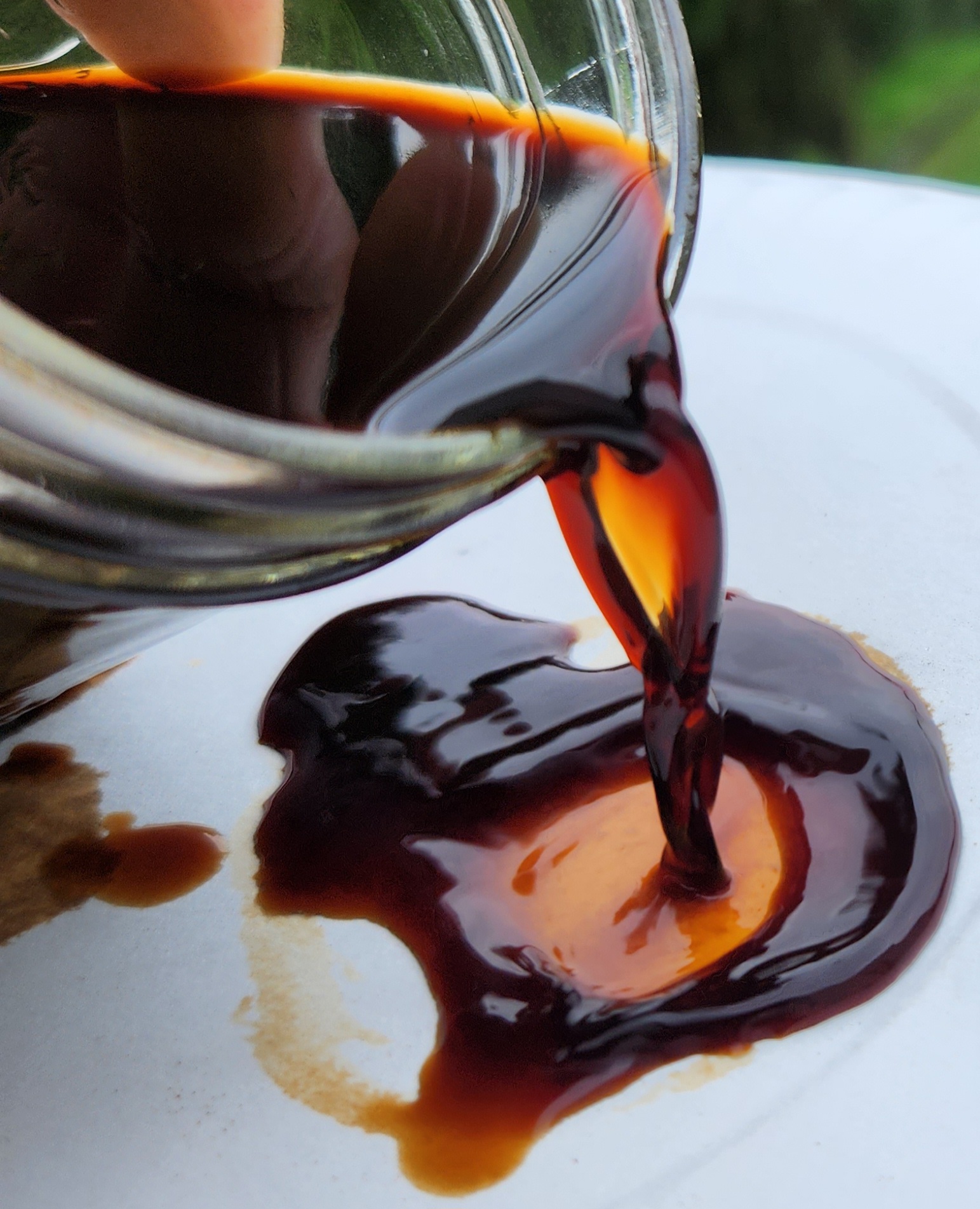
It's not a drop-in replacement for petroleum in most applications — we're upfront about that. It has characteristics that require equipment consideration: an energy density of 16 to 19 MJ/kg (roughly 40% to 45% of No. 2 fuel oil), it's denser than water at 1.1 to 1.3 kg/L, it carries 15% to 30% water content, and it's acidic at pH 2.0 to 3.5, which means your storage and handling materials matter. The 35% to 40% oxygen content by weight is what drives the lower heating value compared to hydrocarbons.
None of these are dealbreakers. They're engineering problems with known solutions. For a closer look at how we produce it, visit our biofuels page.
1. Industrial Boilers and Process Heat
This is the application we recommend most often for clients who are new to bio-oil. It's the most commercially mature, the technology is well understood, and in many cases the economics work without any subsidies.
The setup is straightforward. Bio-oil gets atomized and combusted in modified boiler burners to produce steam or hot water. The modifications are real but not exotic: upgraded atomization nozzles to handle bio-oil's higher viscosity, corrosion-resistant fuel lines and storage tanks (stainless steel or HDPE for the acidity), and adjusted combustion parameters for the water content and different heating value.
We see the strongest fit for food processing plants that need process steam, lumber and paper mills that are already generating biomass waste on-site, district heating systems in regions with carbon reduction mandates, and greenhouse operations looking for renewable heat. That's not an exhaustive list, but those are the conversations we have most often.
The performance data from commercial installations backs this up. Combustion efficiencies run 85% to 92%, which is comparable to fuel oil systems. SOx emissions are essentially zero because biomass contains negligible sulfur. Particulate emissions are manageable with standard flue gas treatment. And the CO2is biogenic — the carbon was pulled from the atmosphere by the source biomass recently, so it's considered carbon neutral.
From what we've seen, this is the lowest-risk entry point. If you're evaluating bio-oil for the first time, start here.
2. Combined Heat and Power (CHP)
CHP takes the process heat application a step further: you generate electricity and capture the waste heat, pushing overall energy efficiency to 70% to 85%. That's significantly better than producing heat and power separately.
Bio-oil fuels a combustion engine, gas turbine, or Stirling engine driving an electrical generator. The waste heat from power generation gets captured for space heating, process heat, or hot water. Some installations run dual-fuel configurations, blending bio-oil with natural gas or diesel for combustion stability.
Here's where we give a candid warning: CHP on bio-oil demands more attention to fuel quality than simple boiler combustion. Variations in water content, viscosity, and particulate levels can affect engine performance and maintenance intervals. Pre-filtration, fuel blending, and temperature management are standard practices, but they add operational complexity. Current installations range from 100 kW to 5 MW electrical output — suitable for industrial facilities, agricultural operations, and community-scale energy systems.
The economic case is strong when it works:
- Revenue from electricity sales (or avoided purchases) plus heat utilization
- Renewable energy credits or feed-in tariff payments, depending on your jurisdiction
- Reduced grid dependence and less exposure to energy price swings
- Carbon reduction credits for displacing fossil-fueled heat and power
We believe CHP will be a growth area for bio-oil, but it requires more operational sophistication than boiler applications. It's a good fit for facilities that already have engineering staff managing energy systems.
3. Sustainable Aviation Fuel (SAF) Feedstock
This is the application that gets the most headlines, and for good reason. Aviation accounts for about 2.5% of global CO2 emissions, and unlike cars and trucks, planes can't run on batteries. They're too heavy. SAF is the primary decarbonization pathway for aviation for at least the next two to three decades, and bio-oil from fast pyrolysis is emerging as a key feedstock.
The technical pathway: bio-oil undergoes catalytic upgrading (hydrodeoxygenation) to strip out the oxygen, reduce water content, and boost energy density. The upgraded bio-oil then gets co-processed or refined in conventional petroleum refinery infrastructure to produce jet fuel meeting ASTM D7566 specifications. The co-processing route has been approved under ASTM's provisions, allowing refineries to blend up to 5% upgraded bio-oil into their existing crude feedstock. Standalone refining pathways are also in development.
The regulatory push behind SAF is intense. The EU's ReFuelEU mandate requires 2% SAF blending by 2025, rising to 6% by 2030 and 70% by 2050. The U.S. SAF Grand Challenge targets 3 billion gallons annually by 2030. CORSIA (the International Civil Aviation Organization's reduction scheme) creates global demand. Major airlines have signed multi-billion-dollar offtake agreements.
Bio-oil from fast pyrolysis achieves lifecycle greenhouse gas reductions of 50% to 85% versus conventional jet fuel, meeting SAF sustainability thresholds comfortably.
Our honest take: SAF represents a massive market opportunity for bio-oil producers, but the upgrading and refining steps are capital-intensive and require partnerships with refineries. This isn't something a standalone pyrolysis operator will do alone. We see it as a feedstock supply play — produce high-quality bio-oil and sell it into the SAF supply chain. The demand is there and growing fast.
4. Marine Fuel Blending
Maritime shipping burns roughly 300 million tons of fuel a year, and the International Maritime Organization has set targets to cut greenhouse gas intensity by 40% by 2030 with net-zero by around 2050. That's a staggering amount of fuel that needs to get cleaner.
Bio-oil can be blended with heavy fuel oil (HFO) or marine gas oil (MGO) at 5% to 20% ratios with relatively minor modifications to existing ship fuel systems. The blended fuel reduces fossil carbon intensity while leveraging existing bunkering infrastructure. Higher blend ratios need more significant upgrades — upgraded fuel pumps, heated storage (bio-oil's viscosity climbs at lower temperatures), and corrosion-resistant piping.
Three regulatory drivers make this interesting right now. The IMO 2020 sulfur cap (0.50%) — bio-oil's near-zero sulfur content helps operators comply without expensive scrubber systems. The EU ETS for shipping, which started pricing maritime emissions in European waters in 2024. And the FuelEU Maritime regulation mandating progressive reductions in marine fuel greenhouse gas intensity.
One technical detail that works in bio-oil's favor here: its high density (1.1 to 1.3 kg/L) actually carries more energy per unit volume than lighter alternatives like LNG or methanol. For ships where tank space is at a premium, that matters.
We see marine fuel as an emerging application with real momentum. The regulatory pressure is only going to increase. But it's still early — most activity is in pilot programs and blending trials rather than large-scale commercial procurement. We're watching this space closely.
5. Asphalt Binder Modification
This one surprises people. It surprised us, too, when we first started getting inquiries from road construction companies.
Bio-oil contains phenolic compounds, oligomeric lignin fragments, and other complex organic molecules with chemical similarities to components in petroleum asphalt. Researchers and DOTs have found that adding 5% to 25% bio-oil to conventional asphalt binder can improve low-temperature cracking resistance (extending pavement life in cold climates), reduce binder viscosity so you can mix and compact at lower temperatures (warm-mix asphalt, saving energy during construction), partially replace petroleum-derived binder, and act as a rejuvenator for reclaimed asphalt pavement (RAP), restoring aged binder properties and enabling higher recycling rates.
The research backing is solid. Iowa State University demonstrated that bio-oil modified binders met Superpave performance specs while cutting petroleum binder use by up to 25%. Field trials across several U.S. states have shown comparable or improved rutting resistance and moisture damage performance. The National Center for Asphalt Technology (NCAT) has included bio-oil modified sections in its test track program.
The market potential is huge on paper. The U.S. consumes approximately 20 million tons of asphalt binder annually. Even 10% market penetration for bio-oil modification would mean 2 million tons of bio-oil demand per year. State and federal infrastructure programs are increasingly including sustainability requirements that favor bio-based materials.
Where does this actually stand? We'd call it a late-stage emerging application. The science is proven. The field trials look good. But widespread commercial adoption is still ramping up. We expect this to grow significantly over the next five years, especially as state DOTs build bio-oil into their specifications.
For more on how bio-oil fits into renewable fuel and material supply chains, explore our biofuel applications page.
What Bio-Oil Actually Costs
Production costs currently run $0.50 to $1.50 per gallon, depending on feedstock cost, plant scale, and technology. Compared to the alternatives:
- No. 2 fuel oil: $2.50 to $4.00 per gallon (and you're riding the crude oil rollercoaster)
- Natural gas equivalent: $0.80 to $2.00 per gallon equivalent (varies heavily by region)
On pure energy cost per BTU, bio-oil doesn't always win against fossil fuels. We're straightforward about that. But energy cost is only one line item. When you add carbon credit revenue, renewable fuel incentives (RINs, LCFS credits), avoided waste disposal costs for the feedstock, and price stability — biomass prices don't spike when there's a crisis in the Middle East — the total economic picture shifts, often dramatically. For organizations already facing carbon cost exposure or sustainability mandates, bio-oil frequently comes out ahead on a fully loaded basis.
Where We See This Heading
We've been producing bio-oil from biomass waste at iNBIO long enough to have watched the market shift from "interesting concept" to "active procurement." The trajectory is clear, but it's not uniform across all five applications.
Process heat is ready now. CHP is ready for operators with the technical sophistication to manage it. SAF feedstock demand is scaling fast and will likely be the highest-volume market within a decade. Marine fuel is real but still early. Asphalt modification has strong science behind it and is waiting for the procurement infrastructure to catch up.
Our systems are built for feedstock flexibility and consistent product quality because we knew early on that bio-oil would need to meet different specs for different end uses. That's not an afterthought — it's core to how we designed the technology.
If you're evaluating bio-oil for a specific application, we're happy to talk specifics. Visit our biofuels page for details on our production capabilities, or check our biofuel applications page to see how the use cases map to different industries. The practical question is usually not whether bio-oil works for your application — it's which application delivers the best return for your particular situation.